Click to Call
Alta Vista Insurance Agency

703 Palomar Airport Rd, #280
Carlsbad, CA 92011

Get Directions

Coverage vs. Coverage: How does your liability policy stack up?

In the event something happens to someone else your liability insurance can protect you. 

If you own a home, drive a car, own a business, sell something, hire someone for a job, or other related activities, you have exposure to losses. Carrying a liability policy will provide money for damages to other parties in the event you are liable for injuries or expenses associated with a claim like investigation costs, legal representation, or other expenses.  

Liability insurance is a way to protect your lifestyle and assets from being taken in a judgment.

What would happen if someone sued you and they won? 


What if a judgment was rendered against you and it wasn’t covered by your liability policy; like your homeowner’s liability or general liability if you own a business? 

You may have to liquidate assets, a lien could be placed on your properties if they are exposed, your wages could be garnished, etc. One lawsuit could completely change your lifestyle. That is why umbrella and excess liability insurance is MUST for everyone.  

Both umbrella and excess insurance are designed as an additional layer of protection above primary insurance policies, like homeowners, auto, commercial general liability, and commercial auto.

Which is better? 
What type of policy do I have?
Should I purchase more insurance?

Let’s look at these policies and see how they stack up against each other.

An umbrella policy has two types of coverage; coverage above other insurance policies (that’s the underlying insurance) and coverage for liability exposures for which there is no underlying insurance.

Watch this short video about the importance of umbrella insurance for your personal assets. 

https://youtu.be/L3mtIEuwBy0

Get a Quote

According to the ISO CU 00 01 insuring agreement for coverage A,


“we will pay on behalf of the insured the “ultimate net loss,” in excess of the “retained limit” because of “bodily injury” or “property damage” to which this insurance applies. We will have the right and duty to defend the insured against any “suit” seeking damages for such “bodily injury” or “property damage” when the “underlying insurance” does not provide coverage or the limits of “underlying insurance” have been exhausted.”

The insuring agreement adds two terms that are not seen in general liability policies; “ultimate net loss” and “retained limit”.  

Ultimate net loss” means the total sum, after reduction for recoveries or salvages collectible, that the insured becomes legally obligated to pay as damages by reason of settlement or judgements or any arbitration or other alternate dispute method entered into with our consent or the underlying insurer’s consent. 

Retained limit” means the available limits of “underlying insurance” scheduled in the Declarations or the “self-insured retention,” whichever applies. Self-insured retention is the dollar amount listed in the declarations page that will be paid by the insured before this insurance becomes applicable, like a deductible, only with respect to “occurrences” or offenses not covered by the “underlying insurance”. The self-insured retention applies for the exhaustion of applicable underlying limits.

This policy is the reigning “pound for pound” champion. It combines both technique and talent to protect insureds from loss. 

No matter whether it’s a loss covered by an underlying policy or a loss that is not covered by an underlying policy, the umbrella insurance policy will be victorious and protect the insured. 

Now, let’s look at the opponent, the excess insurance policy. The first disadvantage we can see is in the insuring agreement. This policy only has one skill or insuring agreement. 

“We will pay on behalf of the insured the “ultimate net loss” in excess of the “retained limit” because of “injury or damage” to which insurance provided under this Coverage Part applies. We will have the right to defend the insured against any suit seeking damages for such “injury or damage” when the applicable limits of “controlling underlying insurance” have been exhausted in accordance with the provisions of such “controlling underlying insurance”.  

Again, we need to look at the terms so we can define what is covered. “Ultimate net loss” means the total sum, after reduction for recoveries, or salvages collectible, that the insured becomes legally obligated to pay as damages by reason of:  

  • Settlements, judgements, binding arbitration, or  
  • other binding alternate dispute resolution proceeding entered into with our consent. 

Ultimate net loss” includes defense expenses if the “controlling underlying insurance” specifies that limits are reduced by defense expenses. 

There are many different types of insurance policies that can provide coverage here. Even policies that include defense costs like cyber liability or professional liability.  

So, an excess policy can provide protection with many different types of insurance policies BUT there must be an underlying policy that provides coverage. If there is NO underlying policy, the excess insurance is powerless. 

Controlling underlying insurance” means any policy of insurance or self-insurance listed in the Declarations under the Schedule of “controlling underlying insurance.” Controlling is critical. It means the underlying insurance controls how coverage applies.

Umbrella and excess insurance policies are additional layers of protection above primary insurance policies. However, when we put them in the ring against each other, we can see they are not the same.  The umbrella is the stronger more well-rounded policy.  

In conclusion, the umbrella policy can be used to cover some losses when there is NO insurance. The excess policy only covers losses that are covered by the other insurance policies that exist as primary insurance.  


Now, it’s always important to read the entire policy. There are exclusions, conditions, and definitions that you should review with your agent in order to determine which protection you need. 

To find out how you can add another layer of protection for your lifestyle or business, schedule an appointment with one of our agents for a FREE needs-based analysis. 


Get a Quote

Read More

Let’s Clear The Air About Earthquake Insurance

After the recent 6.4 magnitude earthquake on July 4th and the 7.1 quake on July 5th, more and more residents understand that earthquake risk is REAL in Southern California. The seismic activity was centered around the towns of Trona and Ridgecrest, but the aftershocks were felt from LA to San Diego. 

This last round of earthquake activity has shocked many California residents into rethinking the importance of earthquake insurance to protect their homes and assets.

If you’re looking to fully protect your lifestyle, it is highly recommended you purchase earthquake insurance…Now. 

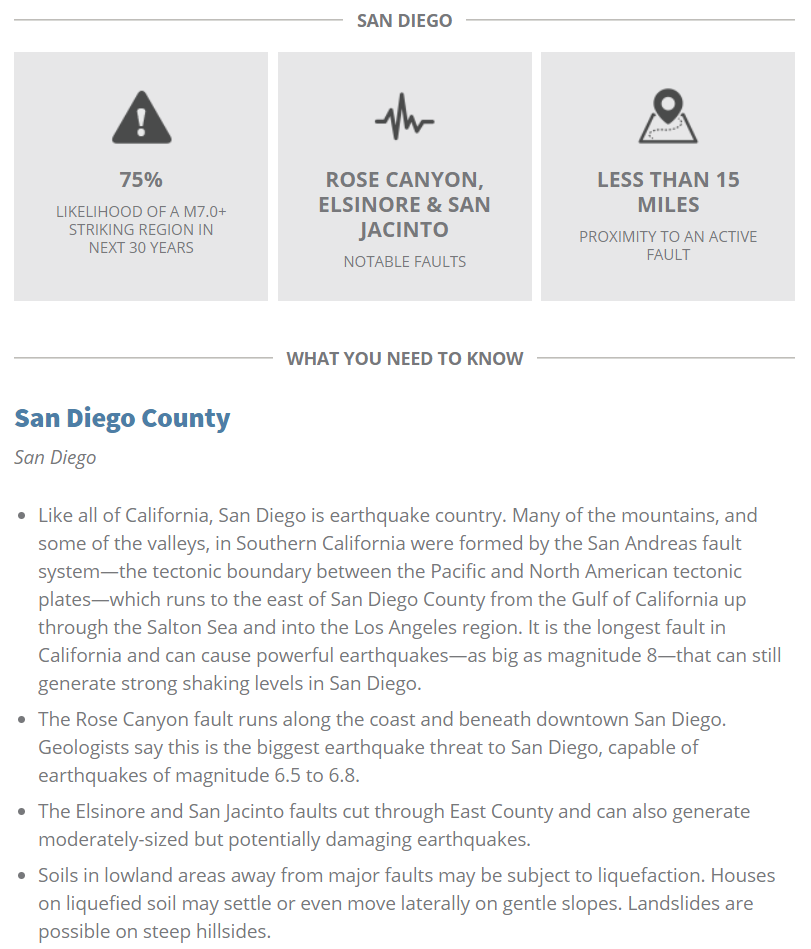
Other than wildfire, earthquakes are one of the leading natural disasters Californians face. Most residents live within 30 miles of an active fault line and only 10% of California residents carry earthquake insurance. 10 percent!

Does it make a lot of sense to partially insure your most valuable asset, your home? 

Insurance tip: A residential property insurance policy does NOT cover damage due to earthquake or seismic activity. You need a separate earthquake insurance policy.

Watch this short video about the benefits of carrying earthquake insurance. Contact one of our insurance guides and get an earthquake insurance quote for your home today! Call 888-724-2124.



Get A Quote

Can I purchase earthquake insurance after an earthquake? Yes.

The Department of Insurance released a bulletin on July 12th about the requirement of all California Earthquake Authority participating insurance companies to write CEA earthquake policies. 

In response to the Northridge earthquake in 1994, the California Legislature created the California Earthquake Authority (CEA)—a not-for-profit, publicly managed, privately funded entity. Residential property insurers could offer their own earthquake insurance or become a CEA participating insurance company. 

CEA provides two-thirds of the residential earthquake insurance policies sold in California. By selling policies exclusively through these participating insurance companies, CEA has become one of the largest providers of residential earthquake insurance in the world. The CEA is a not-for-profit organization and receives no funding from the State of California, whether for operations or claim liabilities, and is not a part of the state budget. CEA is financed solely through insurer contributions, policyholder premiums, and its own investment returns.

Following the recent earthquakes in Ridgecrest, the Department of Insurance received numerous complaints that some CEA participating insurers were denying applications for CEA earthquake insurance coverage from insureds who already had a residential underlying insurance policy with that insurance company.

Many agents and brokers were misinforming their clients that there is a “moratorium” on selling CEA coverage, even to those insureds who have an underlying insurance policy with that insurance company. 

Image courtesy of California Earthquake Association

That is FALSE. There is NO moratorium on selling CEA coverage.

California Insurance Code Section 10083 requires that offers for earthquake coverage made by a Participating Insurer contain a specific disclosure that includes the statement, “If you choose not to accept this offer within the 30-day period, you may apply for earthquake coverage at a later date.” Refusing to write CEA earthquake insurance coverage for policyholders with a residential insurance policy is not in compliance with state law or the intent of the CEA statute and mission.

The CEA has confirmed to the Department of Insurance that it expects all participating insurers to take applications for and bind CEA coverage if requested by an insured who has an underlying residential insurance policy with the insurer. 

A moratorium on earthquake insurance has never been declared by the CEA. Some participating insurers have declared a moratorium on the sale of their own new homeowners and other fire insurance policies in areas of California impacted by the recent Ridgecrest earthquakes. 

And if that company is not writing new property insurance policies then they would not be making the accompanying mandatory offer of earthquake insurance to those homeowners. 

However, this should NOT effect current insureds with a residential insurance policy from a CEA participating insurer. They should be assisted in purchasing a new CEA policy immediately.

“So, if you have property insurance from an insurance company that participates with the California Eathquake Authority you can purchase earthquake insurance NOW.”

Contact us and we can review your home insurance policy and tell you if your company offers earthquake insurance protection with the California Earthquake Authority. We’ll also do a coverage check up to make sure you have the right protection for your lifestyle. Give us a call at 888-724-2124.


Get A Quote

Read More

Check out the top 65 gifts for Father’s Day


Even the grisliest of fathers need to shave. This Father’s Day, help him look sharp with a subscription to Harry’s. Boasting razors composed of top-of-the-line German blades and a collection of hydrating shaving gels and creams, Harry’s has everything Dad needs to complete his grooming regimen.

If the dad in your life is a diehard Apple fan, you can’t go wrong with an Apple Watch. From tracking his workout gains and monitoring his heart rate to making calls and sending texts, this gadget makes it easy for him to stay on top of it all.


 $399 at Apple.com


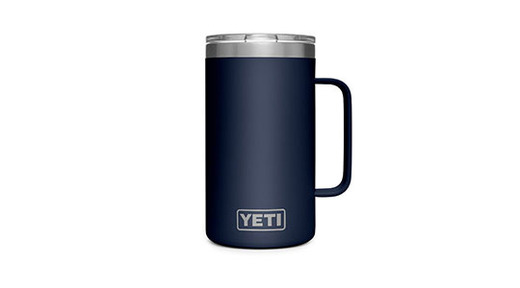
The Yeti Rambler Mug is ideal for the dad who loves roughing it, without compromising. Its stainless steel construction and double-wall vacuum insulation will ensure his brew stays icy cool until the last drop.


$29.99 at Yeti.com

Check out the full article here!


Full Article Here

Read More

San Diego Food Bank

Do you even lift, bro?


Get Involved!

“Do you even lift, bro?”

Psh, these guys and the team from Liberty Mutual lifted 18,000 lbs of food for the hungry. These mighty people went to the San Diego Food Bank last Wednesday and helped package heaps of potatoes and other produce.

We love our city!

Interested in volunteering?

Some of their upcoming fun events that you can attend and/or volunteer at:
July 22, 10:30-8pm, Drive Out Hunger Golf Classic, Vista
Sept 7, San Diego Blues Festival, 12-8, Embarcadero
Nov 28, Thanksgiving morning, Run for the Hungry, downtown SD

Thankful for organizations that make a difference in our community!


Read More

Alta Vista Insurance

Don’t get caught in the new insurance wave

This post was inspired by the CHUBB video shown here.

It’s how experts in insurance view the potential impact of disruptive businesses giving top priority to price over protection.

Chance. It’s why we wear our seat belt; it’s why we get healthy amounts of insurance.


https://youtu.be/euAXEOTQGd0

You’ve probably heard of the marshmallow experiment. Kids had a choice between getting a lone marshmallow or an entire bag. The catch? They had to wait 15 minutes alone with the single marshmallow unpackaged right before them. Mouths watering, some kids were able to make it through, others were not. Why? Their (and our) natural inclination to think short-term stopped some of them from getting the real, more lasting reward…Enduring those 15 minutes required grit and long-term thinking.

Maybe we need to take notes from those 5-year-olds who made it through, especially when the stakes are higher than missing out on marshmallows, like with, say, your beloved wedding ring, your cozy home, sweet subaru, and all your worldly goods.

For example, mass savings on insurance is a GREAT thing when done correctly, as independent agents are able to do. They can save you thousands of dollars without compromising healthy levels of defense through honest means like shopping around, spending extensive time understanding your unique situation and finding the BEST option out there, bundling, etc.

On the other hand, if savings are achieved without caution or are presented as a gimmick, as some disruptive insurance companies do today, you could be financially hurt or ruined.

Far too often, disruptive insurance companies tout inexpensive prices which favors buyers on price but counts on the unlikelihood of a costly claim affecting their clients. Many have gotten burned by this. Presenting a low price simply to create a hollow but more attractive offer is short-sighted, deceitful, and can bring about headache, heartache, and huge issues.

So how can you tell if an insurance company is honest or not? Glad you asked.

1. Read their customer reviews, and not just the ones on their website or their app. Use sites like Yelp!, Facebook, and Google to find candid opinions about their insurance services

2. Read the terms of your quote. 

3. Contact an insurance professional to review what the fine print means and get a second opinion. If you need help, call 8887242124 and one of our team members will be happy to help you sort through the jargon and ensure you have got the coverage you need.

While a disaster is unlikely, it is not improbable enough to bet and thus forfeit your long-term plan, home, and savings.
Cheap but insufficient insurance just won’t cut it in the long term.

At Alta Vista Insurance, an independent agency, a helpful and skilled insurance guide will find you the best prices without compromising quality.
Providing you with insurance that will protect your lifestyle, your future, and your assets since 1978,


Schedule an Appointment

Read More

Hobbyists and Full-Time Farmers: Protecting Your Farm

You need the best protection for your hard work and home. 

That can be confusing when you live and work in the same place, like on a farm. 

How do you classify a farm house? A winery or orchard with a dwelling on it?

Click the photo below or click here to read our article that offers a clear explanation for why and when you need a separate policy from your homeowners policy. We’ve also included a tip to avoid lapsing coverage when you buy new equipment.

Check it out!

Hobbyists and Full-time Farmers: Protecting Your Farm

Read More!

Read More

Putting People First

Putting You First

We start by putting your needs first. You can always contact us and we will promptly resolve your issue. We are structured as an inverted pyramid, we put all our clients needs on top. We volunteer in our community to give back, and provide annual policy reviews to our clients to stay connected with you. The job of your agent is to know and understand your unique situation and needs. We provide a comprehensive needs based analysis of your risks and exposures, identify your unique situation, risk tolerance, and then finally provide a proposal to offset undesirable risk to one of our trusted insurance providers. We would love your feedback. Let us know how we are doing.

VIP Service

You are not a policy number. When you call us, we will identify your account by your name. You are the reason we are here. We are here to help protect you. We provide valuable insight into risk management strategies and the ever changing insurance product landscape. We strive to become your trusted insurance adviser. Let’s talk about your hopes, your dreams, and your future, and then let’s make a plan together to get you there.

24/7 Online Service

We live in a connected world. This is the 21st century. You want 24/7 claims and customer service. But you don’t have to choose between either local personal service, or a large call center. Now, you can have it all. We offer 24/7 online policy access and online carrier direct personal claims filing. For those times you don’t want to talk to somebody, you can login and view your policy, request coverage changes, download ID cards and get quotes online with our online client center.

Local Professional Agents

When you do want to talk to someone, we are here for you. You have a personal and professional dedicated account manager that gets to know you and your situation. We can easily advise you on changes in the insurance market place. We have both, personal local agents and online policy access to best meet your busy lifestyle. As your insurance agent we are here to help you asses your risk, minimize your exposure, and manage your insurance spending, both on premiums and retained risk. Meet one of our agents today!

Partner Testimonials

That is enough of tooting our own horn. Learn more about our trusted business partners have to say about us, and read some clients testimonials. Then, when you are ready, we look forward to working with you too.

Next Steps

Now that you know a little bit about us, it’s time to take the next step and tell us a little bit about you. Start your online needs based analysis today.

Read More

What to look for in an Insurance Agent

When picking an insurance agent it is important to know who your agent represents. Some insurance agents are what are called “captive” agents. Captive agents work for the company they represent. Some examples of companies captive insurance agents work for are AllstateState Farm, or Farmers. Captive agents are limited to only offering products to you that are offered by the company they work for, whether or not that product is the best solution for your unique situation.

An independent insurance agent works for you, not the insurance company. Independent agents are free to find a policy that best fits your needs no matter which insurance company is offering the coverage. Independent agents really do work for you, not the insurance company. They are free to offer multiple policy options side by side for you to review. When the insurance companies compete for your business, you win.

The agents at Alta Vista Insurance Agency are proud to be your local independent insurance agents. We are located in Vista California and strive to be a local independent resource for you, our clients. Our staff is your team, and we are here, ready, and able to provide responsive customer support to our neighbors throughout San Diego County. We primarily serve Vista, Oceanside, San Marcos, Escondido, Rancho Bernardo, and Poway. Please feel free to contact us for your insurance needs.

Contact us today to learn more about how we can service your California insurance needs. We look forward to hearing from you!

Read More

The One Way To A Speedy Real Estate Transaction

Would you marry someone whose history was a mystery? Or are you prone to purchase a car without knowing the facts of its past?

To connect you with the history of a home you’re considering, we’re offering a free report, guaranteed to give you peace of mind and help you avoid time and money-wasting complications during and after the sale.

Get a clue! Come on, seriously.

A C.L.U.E., the Comprehensive Loss Underwriting Exchange, is a loss history information exchange provided by LexisNexis® Risk Solutions Inc. It enables insurance companies to access and use prior loss information in the underwriting process. Think of it as “the cloud of claims”.

Here’s how it works

Each month, participating insurers submit loss information to the C.L.U.E. information exchange, which is loaded to the C.L.U.E. database. Insurance companies request this data by forwarding search criteria such as an insurance applicant’s name, risk address, date of birth, and Social Security Number. The C.L.U.E. system searches its database for information that matches the requested search criteria. A C.L.U.E. report is then generated and forwarded to the insurer. When you or your insurance company receive a C.L.U.E. report, it includes all losses accessed by the search criteria that were reported to us within seven years of the date of the request. Home warranty claims are not included on a C.L.U.E. report.

The C.L.U.E. report is a valuable piece of information to provide you a clearer look into the prior loss history of the property you’re peeking at. 

Reading the report

First, you want to look for claims associated with the risk address. The report can sometimes show claims filed on another location owned or occupied by the seller. You’ll want to look for claims frequency rather than severity. These would be claims that indicate a potential ongoing problem or the possibility for future losses. Multiple occurrences to the same areas in the home can indicate faulty or defective systems. For example, water losses and mold are big ones to look for and are one of the most widely reported causes of loss or perils. Other perils to watch out for are fires occurring in the home, not wildfire, and theft or burglary. These type of losses could indicate morale hazards or the home could be in a questionable area. Insurance companies are tightening their guidelines when it comes to water losses resulting from inside water damage, not weather related flood claims. Effective this year, many admitted insurance carriers will decline a risk if there has been a significant water loss on the property within the last 3-5 years. This would include damage exceeding $2,500. Normally, losses follow the insured and can impact the cost of insurance or insurability when moving to a new location. Due to the rise in frequency and extensive costs resulting from water damage claims. more and more companies are looking at water losses at new business and declining.

One Final Thought

The cost of the damage is important and can indicate the severity of the incident and the amount paid by the insurance company for the loss. Accidents happen. Just because a property has been impacted by a large claim or series of claims does not mean you should avoid buying that house. Review the report with your realtor and request a disclosure from the sellers about how the claims were resolved. Were all repairs completed and was everything built back to code? Was the home replaced with like kind and quality?

Talk to your insurance agent about the loss(es) that were filed, how the insurance companies handled the claims and how this will impact insurance for the home moving forward.

GET A CLUE!

Read More

Testimonials